TV News Presenter
Gente que viene y ¡Bah!The TV News Presenter, identified by Bea as Rebeca Ramos, occupies two increasingly entangled roles: she is the celebrity whom Víctor chooses over his fiancée, and a journalist who later challenges Irene over the biomass plant. The story first makes her visible through Bea’s wounded attention, as a face on television and a figure in gossip coverage. It then gives her a public voice of her own, directing an aggressive interview at Irene and forcing the local project’s disputed terms into view. Her arc joins intimate betrayal to the power of media to frame private lives and political decisions.
Identity and Introduction
The presenter is first introduced by profession rather than personal name: she is the woman presenting the three o’clock television news. Her precise identity becomes legible to Bea through the public traces surrounding her, including broadcasts, photographs, magazine coverage and, eventually, a television interview with Irene. Bea later addresses her as Rebeca Ramos during the demonstration, naming the woman who had initially existed in her account as the rival from the news.
Before the affair becomes explicit, Bea describes the presenter as a celebrity on Víctor’s list of five people with whom each partner had supposedly been granted permission to have sex. The couple treated the pact as evidence of modern sophistication, though Bea later judges their confidence in it foolish. The list was an improbable fantasy, not an actual encounter with a celebrity; its joking rules nevertheless give Víctor’s later involvement with the presenter a cruelly literal connection to their shared joke.
Bea’s perception of her is intensely mediated. After the breakup, Bea studies the presenter’s photographs and repeatedly watches her television work, noticing her command of the teleprompter, her transitions into video reports and her improvisation on air. Bea also recites the presenter’s public biography as she understands it: three master’s degrees, five languages, and a humble background from which she had made herself. The details are filtered through Bea’s fixation and resentment; the narration offers no independent account of the presenter’s private character.
The Affair and Bea’s Discovery
At a celebration held across three floors of the Casino de la calle Alcalá, Bea sees the presenter among the guests. By then she is engaged to Víctor and, after drinking heavily, points the woman out to him. Invoking their five-celebrity pact, Bea tells Víctor that he could treat the encounter as an early bachelor-party opportunity. Víctor, more composed, tells her to stop talking nonsense. The exchange briefly places Bea in control of the joke, but also shows how the pact allows a real person to enter their relationship as a test of its supposed security.
That security collapses when Bea finds Víctor kissing the presenter. In an impulsive response, she takes her engagement ring from her bag and pushes it into Víctor’s mouth. Eight days later, a report in Cuore says that a handsome young man had left the presenter’s apartment at eight in the morning. Bea treats the report as confirmation that the kiss had become an affair. Her shock arrives not as measured grief but as a bodily catalogue of distress: horror, pain, fever and a desperate wish for sedatives.
The presenter’s public image continues to reach Bea through the same media that has made her a rival. In a televised interview outside her ordinary-looking residential building, the presenter is asked about having been seen with a man and describes him as a friend, smiling in a way Bea considers suspicious. Later Bea finds a recent photograph on the presenter’s social-media account: Víctor is in it, wearing grey tracksuit trousers. Bea reads the image as further proof of the relationship and reacts with anger. The photograph and the brief interview do not supply a complete account of the affair; they show how Bea assembles a private story from public appearances.
From Celebrity Rival to Publicity Subject
The relationship also draws Bea into the presenter’s professional orbit. At the Hotel Cantábrico, Bea drunkenly reaches across a reception desk to use the computer and searches for Víctor’s name. She falls over the counter, gathers the papers knocked down in the fall and manages to see his room number before the receptionist unplugs the computer. The episode is an attempted intrusion into hotel information, not proof that Bea learns who is sharing Víctor’s room.
The receptionist’s hidden-camera appearance later turns the episode into public material. On television, a blurred image shows a man in a black-and-grey uniform, his head cut off by the framing. Bea recognizes the receptionist’s voice as he discusses the presenter and her boyfriend staying at the hotel. He refuses to disclose whether they were in the same room, describing himself as a professional, but recounts that a woman named Beatriz had entered the man’s room claiming to be his ex-girlfriend, thrown a shoe at him and kept him from pursuing her. He says they did not leave during his shift. The footage exposes Bea’s conduct while withholding the detail she had been trying to discover, and moves a hotel encounter into a broadcast audience without her control.
A national report then expands the story beyond the hidden-camera account. It casts Bea as the disturbed ex of the presenter’s boyfriend, identifies her as the woman who entered Víctor’s room, and investigates her family and circumstances. In the same account, her breakup is joined to Irene’s disputed mayoralty and the biomass project, Débora’s separation, and other family scandals. The presenter’s prominence is part of the public frame through which Bea becomes news: a romantic triangle supplies an accessible personal angle, while the report folds it into a much wider portrait of the family.
Reporting on Irene and the Biomass Project
The presenter’s public role changes scale when she interviews Irene about the biomass plant. Bea reports that the journalist first approached her sister through flattery, but turned sharply against her once the cameras were recording. The program, later identified as La verdad de la energía verde, challenges the claim that biomass power is clean and beneficial. The presenter raises questions about the fossil fuels consumed in transporting forest material, what remains after combustion, carbon-dioxide emissions and the amount of woodland required to supply a plant of that size.
Her questioning also presses on the project’s economic promises. She cites other plants that had closed, the cost of subsidies and the gap between promised jobs and the smaller number ultimately created elsewhere. Irene has answers to many of the questions, but Bea’s account depicts her struggling to respond as the presenter supplies more data. The interview thus shifts the dispute from a local contest between supporters and opponents to a wider challenge about the environmental and economic claims made for biomass energy.
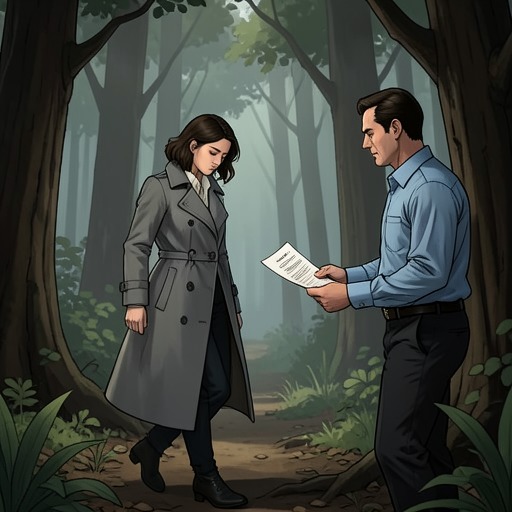
The exchange then turns from the technology to the political arrangements behind the plant. When Irene denies wrongdoing, the presenter shows her an iPad copy of an agreement modifying the project’s parameters, a change Irene says she did not know about. The journalist frames the revised terms as evidence that the plant seeks profit at the expense of neighbors’ health and accuses Irene’s left-wing government of promoting the industry and making it a political emblem. Irene, caught off guard, responds by denying the charge angrily. The scene’s force comes from the document’s appearance on camera: a paper trail that Irene had not seen becomes the interviewer’s instrument for redefining the controversy.
Conflict, Consequences, and Narrative Role
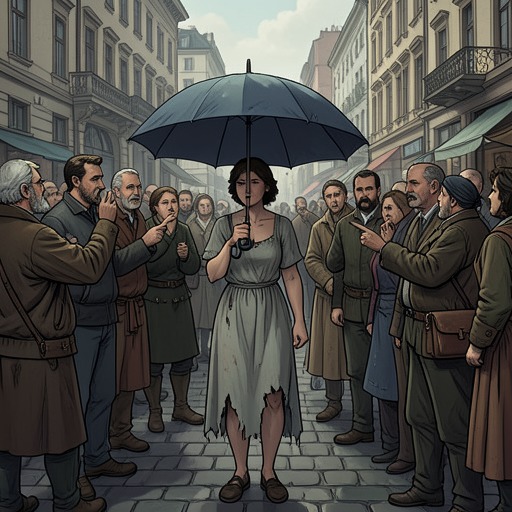
During the mass demonstration, the presenter reports from the crowd with a microphone and television camera. Bea, already pursued by journalists, sees her ahead and experiences the encounter as a trap: behind her are the cameras following her, and in front is the woman she associates with the collapse of her wedding plans. Bea calls out to Rebeca Ramos and confronts her publicly, hoping that a more sensational personal clash might divert attention from the protest. The tactic succeeds only in part. Bea’s insults circulate through celebrity programs for a week and provoke extended, heated discussion, but the demonstration remains too large to be ignored, and its message continues to appear in news coverage.
The presenter therefore functions as more than the romantic rival Bea initially makes of her. In Bea’s account, her broadcasts, interviews and reported appearances repeatedly transform events into images and stories that travel beyond their original setting: a kiss becomes gossip, a hotel incident becomes hidden-camera footage, and a local policy dispute becomes a nationally legible confrontation. Yet the presenter is not simply a symbol of tabloid intrusion. In the interview with Irene, her questions and the document she displays expose information with political consequences. The same media attention that turns Bea’s private crisis into spectacle also gives the biomass dispute a larger public stage, though the coverage cannot be reduced to Bea’s attempted diversion or controlled by any one participant.